Immunology Atlas

Enable Medicine — Immunology Atlas

High-Resolution Data for
Inflammatory Disease

Multimodal disease data for the next generation of immune-targeted therapies

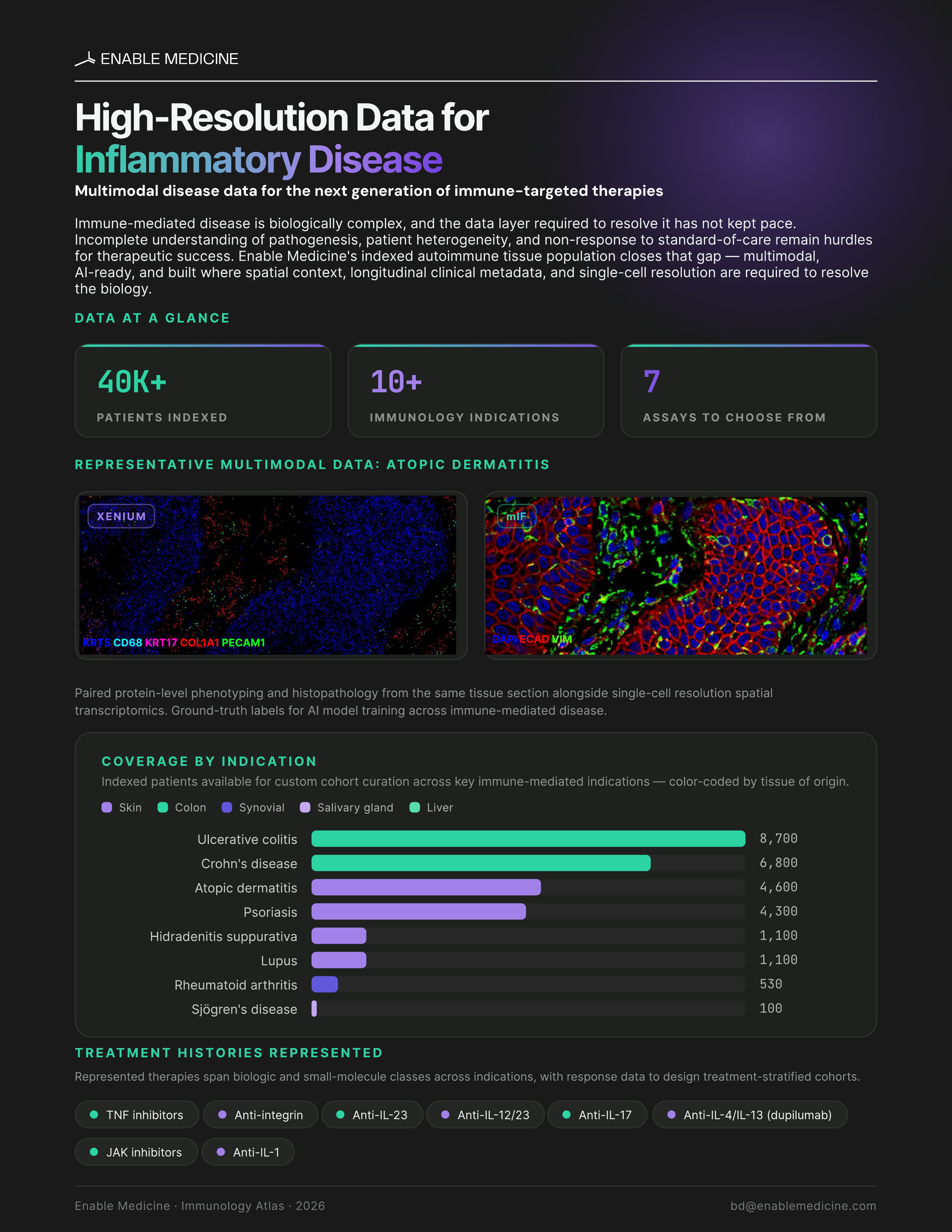
Immune-mediated disease is biologically complex, and the data layer required to resolve it has not kept pace. Incomplete understanding of pathogenesis, patient heterogeneity, and non-response to standard-of-care remain hurdles for therapeutic success. Enable Medicine's indexed autoimmune tissue population closes that gap — multimodal, AI-ready, and built where spatial context, longitudinal clinical metadata, and single-cell resolution are required to resolve the biology.

Data at a Glance

40K+
Patients Indexed
10+
Immunology Indications
7
Assays to Choose From

Representative Multimodal Data: Atopic Dermatitis

Xenium
KRT5CD68KRT17COL1A1PECAM1
mIF
DAPICD45ECADATP1A1ASMAVIM

Paired protein-level phenotyping and histopathology from the same tissue section alongside single-cell resolution spatial transcriptomics. Ground-truth labels for AI model training across immune-mediated disease.

Coverage by Indication

Indexed patients available for custom cohort curation across key immune-mediated indications — color-coded by tissue of origin.

Skin Colon Synovial Salivary gland Liver
Ulcerative colitis
8,700
Crohn's disease
6,800
Atopic dermatitis
4,600
Psoriasis
4,300
Hidradenitis suppurativa
1,100
Lupus
1,100
Rheumatoid arthritis
530
Sjögren's disease
100

Treatment Histories Represented

Represented therapies span biologic and small-molecule classes across indications, with response data to design treatment-stratified cohorts.

TNF inhibitors Anti-integrin Anti-IL-23 Anti-IL-12/23 Anti-IL-17 Anti-IL-4/IL-13 (dupilumab) JAK inhibitors Anti-IL-1

Multimodal Disease Data for AI-Powered Drug Development

Why the Data Layer Matters

Target Discovery in Non-Responders

Conserved cellular and molecular network drivers of non-response are invisible in bulk data. Cell-resolved, spatially-anchored atlases reveal the mechanisms behind refractory disease and identify patient subsets that benefit from alternative mechanisms.

Patient Stratification

Heterogeneity within a single indication is the largest source of trial failure. Spatially resolved molecular data linked to longitudinal clinical metadata supports retrospective stratification analyses and prospective trial inclusion design.

Translational Biomarkers

Predictive and pharmacodynamic biomarkers require resolution that standard-of-care data cannot provide. Cell-level protein and RNA expression in tissue context, paired with treatment and response metadata, supports biomarker discovery and CDx pathways.

Mechanism of Resistance

Treatment-emergent resistance manifests at the cellular and architectural level before it manifests clinically. Spatial single-cell profiling of post-treatment tissue is the substrate for understanding why therapies stop working.

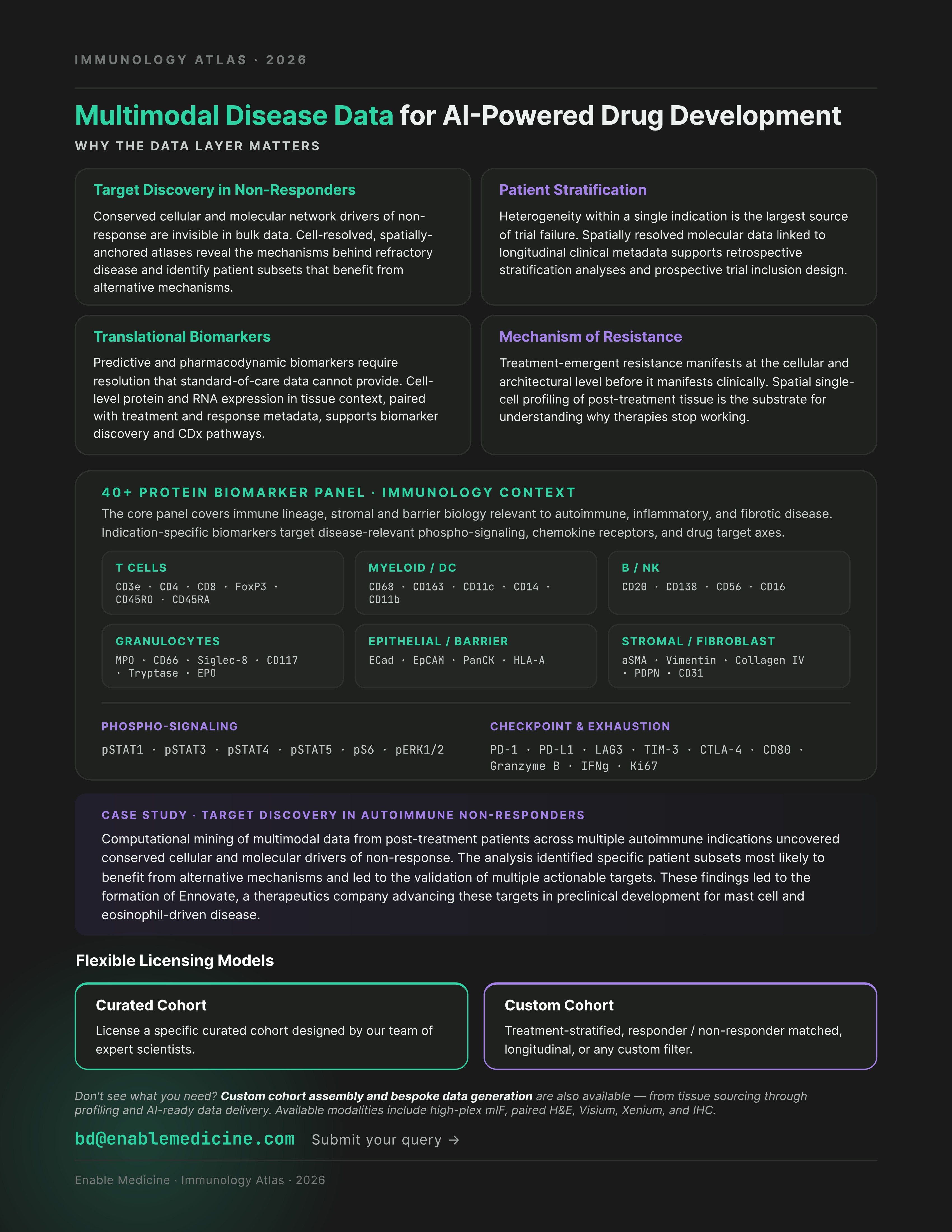
40+ Protein Biomarker Panel · Immunology Context

The core panel covers immune lineage, stromal and barrier biology relevant to autoimmune, inflammatory, and fibrotic disease. Indication-specific biomarkers target disease-relevant phospho-signaling, chemokine receptors, and drug target axes.

T Cells
CD3e · CD4 · CD8 · FoxP3 · CD45RO · CD45RA
Myeloid / DC
CD68 · CD163 · CD11c · CD14 · CD11b
B / NK
CD20 · CD138 · CD56 · CD16
Granulocytes
MPO · CD66 · Siglec-8 · CD117 · Tryptase · EPO
Epithelial / Barrier
ECad · EpCAM · PanCK · HLA-A
Stromal / Fibroblast
aSMA · Vimentin · Collagen IV · PDPN · CD31
Phospho-Signaling
pSTAT1 · pSTAT3 · pSTAT4 · pSTAT5 · pS6 · pERK1/2
Checkpoint & Exhaustion
PD-1 · PD-L1 · LAG3 · TIM-3 · CTLA-4 · CD80 · Granzyme B · IFNg · Ki67

Case Study · Target Discovery in Autoimmune Non-Responders

Computational mining of multimodal data from post-treatment patients across multiple autoimmune indications uncovered conserved cellular and molecular drivers of non-response. The analysis identified specific patient subsets most likely to benefit from alternative mechanisms and led to the validation of multiple actionable targets. These findings led to the formation of Ennovate, a therapeutics company advancing these targets in preclinical development for mast cell and eosinophil-driven disease.

Flexible Licensing Models

Curated Cohort

License a specific curated cohort designed by our team of expert scientists.

Custom Cohort

Treatment-stratified, responder / non-responder matched, longitudinal, or any custom filter.

Don't see what you need? Custom cohort assembly and bespoke data generation are also available — from tissue sourcing through profiling and AI-ready data delivery. Available modalities include high-plex mIF, paired H&E, Visium, Xenium, and IHC.

bd@enablemedicine.com Submit your query →